Drivelines Done Right: Secret Aspects When Picking Custom Fabrication, Repair, and Balance Providers for Fleet Trucks
Business Name: Anderson Brothers Truck & Equipment
Address: 2640 State Hwy 99 N #1, Eugene, OR 97402
Phone: (541) 688-8686
Anderson Brothers Truck & Equipment
Anderson Brothers Truck & Equipment is a long-established truck parts and repair company located in Eugene, Oregon. Founded in 1949, the business has served the region for more than 70 years, building a reputation as a reliable source for heavy-duty truck parts, custom fabrication, and equipment repair. The company works with commercial vehicle owners, fleets, and equipment operators who need dependable parts and services to keep their trucks operating safely and efficiently.
A core focus of Anderson Brothers is providing specialized services for heavy-duty trucks and equipment. Their shop offers custom driveline fabrication and repair, helping customers build, rebuild, or balance drivelines for a wide range of applications. They also specialize in custom U-bolt bending and fabrication, producing precisely sized components for trucks and other heavy equipment. In addition, the company sells both new and used truck parts, stocking a large inventory and offering local delivery in the Eugene and Springfield areas.
Beyond parts sales, Anderson Brothers provides repair and maintenance services for truck components such as transmissions, differentials, and related systems. Their experienced team focuses on delivering practical, cost-effective solutions that help keep trucks and equipment running reliably. With decades of experience and a commitment to local service, Anderson Brothers Truck & Equipment continues to support the trucking and transportation industries throughout Eugene and surrounding communities.
2640 State Hwy 99 N #1, Eugene, OR 97402
Business Hours
Downtime consumes budgets. A fleet supervisor rarely loses sleep over a single universal joint, but the day a truck vibrates at 55 miles per hour, cooks a provider bearing, and secures the rear seal, you feel it two times: when in roadside cost and once again when a consumer calls about a missed out on delivery. Healthy drivelines do not just keep a truck moving, they secure transmissions, differentials, and mounts from abuse. Choosing the right look for custom fabrication, repair, and balance work is less about price on paper and more about consistency, traceability, and a technician who can discuss why a tube left of balance after the last suspension change.
Over twenty years of fielding vibration grievances, I have found out that excellent driveline work looks practically boring. Joints fit as they should, yokes seat square, balance weights are small and where you anticipate them, and the store sends you home with notes worth keeping. When you are examining vendors for a fleet, you want that same quiet skills, backed by procedure, inventory of important Truck Parts, and a reasonable turn-around time that holds up during peak season.
Where driveline tasks go sideways
Most failures do not begin with a bad part. They begin with an assumption. Someone presumes the tube is still straight because the truck did not hit anything. Or that a 2-piece shaft can be stabilized in halves without inspecting put together runout. Or that the phasing marks did not matter when reassembling after transmission service. The truck leaves with a subtle vibration that grows as bushings settle and angles change under load. A month later on, you are changing the provider again.
An excellent shop obstructs those failure courses with measurement. They put the shaft on a V-block or balancer and really check out overall indicated runout. They check weld concentricity, joint fit, operating angles, and phasing. It sounds basic, but you would be surprised how many locations toss a u-joint in on the bench, grease it, and call it a day.
Fabrication quality starts with the best questions
Custom fabrication ends up being required when wheelbase changes, PTO equipment alters shaft length, or the OE part is discontinued. A strong shop asks about your usage case, not simply length. Torque loads custom U bolts Anderson Brothers Truck & Equipment alter with gearing and tire size. Trip height affects angles. Off-road responsibility modifications tube thickness targets. If the vendor leaps straight to price without clarifying specs, keep interviewing.
On medium and heavy trucks, typical tube sizes run in the 3 to 5 inch OD range, with wall density from about 0.083 to 0.188 inch depending on horse power and use. There is no single right option, however there are wrong ones. A tube that is too light goes out of round under torque and resists balance. A tube that is too heavy can press the shaft's crucial speed below typical cruise RPM and leave you chasing a vibration you can not balance out.
An experienced producer will talk through crucial speed, which depends upon tube size, wall density, length, and end restrictions. If you reduce a shaft, that threshold increases. If you extend for an extended wheelbase, it drops. I have actually seen long box vans with high gearing choice up a relentless 62 miles per hour shake after a wheelbase adjustment. The fix was not sticking more weight on the shaft. It was increasing a tube size and rebushing the provider to manage motion.
Balancing that holds over time
Static balance on a bench has its place for small parts. Drivelines require vibrant balance, and not just as soon as. The balance takes if 3 things hold true: television is straight, welds are concentric, and the yolks are square to the tube. Shops that live on return work purchase a difficult bearing balancer sized for heavy shafts, with cones and arbors that fit your series. They work to tight tolerances. For many heavy truck applications, an excellent dynamic balance tolerance lands in a range you can feel with your hands on the balancer stand, not full-on bench dance. If a shop says they constantly hit no, beware. There is no zero in the real life, there are acceptable ranges and repeatable setups.
Ask how they measure runout after welding. A simple dial indication check near each yoke can conserve you hours on the roadway later. Even a couple of thousandths of an inch of TIR near the weld can accumulate to ugly deflection at cruising speed. One fleet I worked with cut its driveline return rate in half by requiring the store to record TIR at 4 positions on each shaft and turn down anything over their spec.
Balance is also not almost the shaft in isolation. Two-piece drivelines need to be put together and balanced as an unit whenever possible. Balancing halves independently just works if you know the slip yoke is indexed and the carrier bearing position is repaired. In practice, store time is saved money on day one and lost on day 10 when the driver reports a new boom in between 45 and 50 mph after a differential swap.
Alignment, phasing, and angles beat guesswork
You can construct the most beautiful shaft in the county, then destroy it with bad geometry. Universal joints want running angles in the same plane and within a narrow variety. Fleet experience says 1 to 3 degrees of operating angle is a healthy target for highway trucks, with input and output angles carefully matched to cancel velocity fluctuations. Less than half a degree can trigger brinelling from absence of movement. More than about 5 degrees on a constant highway runner can invite heat and short joint life.
Phasing matters the moment you present slip sections, two-piece shafts, or multi-axle PTOs. If the yokes at either end of a shaft are not in phase, the driveline develops shake that you can not balance away. Excellent shops scribe clear phasing marks and include reassembly notes. Better stores send a picture or diagram with the job ticket so your tech can confirm alignment when a transmission comes out six months later.
Watch provider bearing height after suspension changes. Air trip trucks can sit greater or lower than specification under load if ride height valves are misadjusted, swinging the rear joint angle. If a truck has a consistent shudder leaving a stop, measure pinion angle at both loaded and unloaded ride heights before you tear into the shaft once again. Sometimes you repair a driveline by changing a bushing.
Weld integrity and concentricity
Look at the welds. A clean, even bead with very little spatter, consistent heat tint, and no undercut signals managed procedure. MIG prevails for tube to yoke due to the fact that it is repeatable and strong. TIG can make sense on thin wall work or materials that need more heat control. The weld itself is not the entire story, however. Concentricity, the relationship in between the tube centerline and the weld yoke bore, guidelines vibration. I have turned down beautiful welds that were off center by the thickness of a matchbook. You feel that at speed.
Shops that fixture every weld, clock the yokes, and verify bore-to-tube alignment will extol their jigs. They likewise mark yokes for clocking so you are not relying on an eyeballed ninety degrees. That practice appears later as smoother running and longer u-joint life.
Materials, series, and practical part choices
Not every truck need to get the greatest joint you can buy. Oversizing adds weight, inertia, and in some cases product packaging headaches. Under most highway conditions, selecting the appropriate series for torque and joint angle is what keeps you out of difficulty. Typical heavy truck households, from 1710 up into the heavy series, cover most road tractors and vocational trucks. If the shop can not inform you why they spec a jump in series, keep asking until they tie it to torque load, PTO task, or a tested weak spot you have seen break.
Greaseable versus sealed joints shows up frequently. Sealed joints decrease upkeep however can be less forgiving of contamination or angle abuse. In fleets that can adhere to a grease schedule, a premium greaseable u-joint with correct seals is typically the longest-lived alternative. Consist of the environment. Dump trucks and mixers see more grit than linehaul. What survives on an asphalt runner might pass away fast on a quarry road.
Yokes, straps, and bolt hardware matter more than the majority of people think. Tossing old strap bolts back in can cost you a driveshaft. Straps stretch. Bolt threads gall. Torque values are not recommendations, and they differ by series. If you do not have a spec, your supplier should. If they hand you parts without torque guidance, ask for it, or discover someone who will.
Custom U Bolts and the surprise link to driveline health
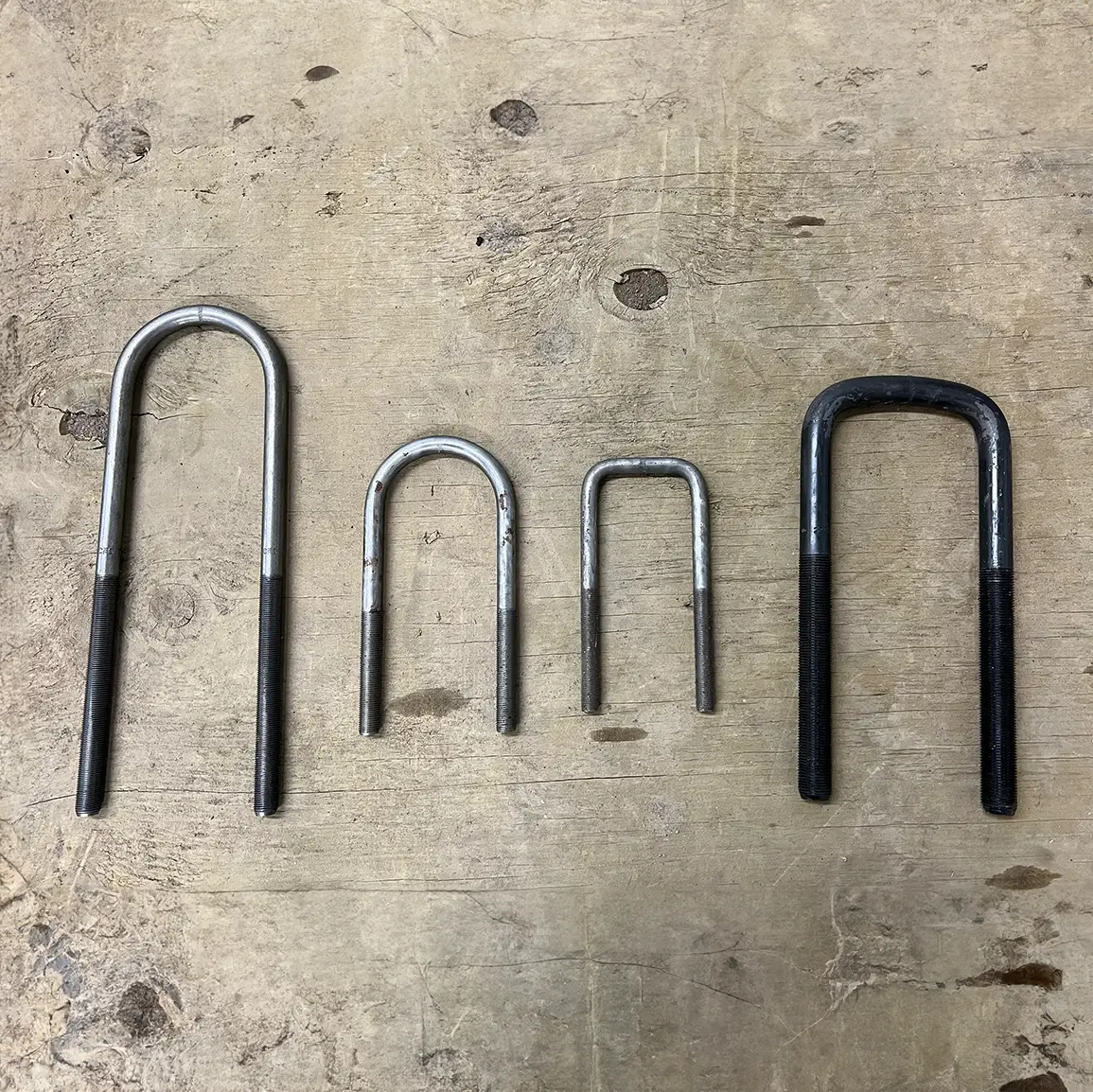
You can have a best driveline and still burn through carrier bearings if the axle does not stay where it belongs. Custom U Bolts may not seem like a driveline topic, but they clamp the axle to the spring pack and keep pinion angle stable. When a U bolt loses securing force, the axle covers under torque, the angle spikes, and the rear joint runs hot. In fleets with duplicated angle associated failures, I look hard at U bolt sizing, thread engagement, washer and nut quality, and re-torque practices after spring work.
A good suspension or driveline shop flexes U bolts on a proper press, utilizes graded rod, and cuts threads tidy. They also measure the stack height so you have complete nut engagement without bottoming out. I have seen more than one mystery shudder cured with a fresh set of correctly sized U bolts and a verified re-torque after 500 to 1,000 miles.
Turnaround time and the real cost of speed
Fast is great if it is repeatable. A rush weld and balance can get a hotshot moving once again, however if you are stocking additional providers to deal with the resurgences, that is not a win. Ask a vendor how they triage work. Some keep an inventory of typical Truck Parts like slip yokes, weld yokes, u-joints, carrier bearings, and center assistance brackets for popular series. That stock, paired with a documented balance and runout process, is what makes fast and right possible at the very same time.
For prepared work, insist on predictability over heroics. A reputable three-day turn-around that holds throughout busy season beats a store that in some cases ends up very same day and in some cases needs a week since their only balancer tech took vacation.
Documentation, traceability, and guarantee that suggests something
Documentation informs you what you are paying for. At a minimum, you desire the finished length, series, u-joint type, balance notes, runout measurements, and any special assembly instructions like phasing marks or slip yoke indexing. In a fleet setting, that documentation helps your own techs prevent rework later.
Warranty without procedure is marketing. When a shop backs their work, ask what they need from you to honor it. If they need return of used parts for failure analysis, that is a great indication. You find out more from the story of a failed joint than from a quiet exchange. Keep an eye out for vendors who will show you a used cap and talk through the wear pattern, from red rust dust to false brinelling. Those conversations make your trucks better.
When to repair and when to start fresh
People typically assume repair is less expensive. Often it is not. If the tube has actually seen a hard bottoming occasion, if yokes are egged out, or if repeated balance weights accumulate in one area, the more cost-effective path may be a new assembly. I tend to draw the line when correcting requires more than a light pass, or when weld cleanup would thin the tube wall enough to drop critical speed. Your shop must have the ability to show you call sign readings and describe the choice. If they can not, you are gambling.
Carrier bearings are worthy of the same judgment. A screeching carrier is not constantly the root cause. If the rubber support failed early, look upstream at angles, ride height, and shaft alignment before tossing another bearing in. An excellent shop will inquire about signs and might request measurements before building parts.
Common driveline misconceptions that waste money
The concept that all vibration is balance associated refuses to pass away. If the shake changes with throttle however not with road speed, you are often taking a look at an angle or mount problem. If it changes with roadway speed however not engine load, balance or tire match is a much better bet. I worked a case on a day taxi that grew at 58 to 62 miles per hour no matter what gear. 2 shafts, 3 balances, no fix. We finally examined rear trip height. One side valve had drifted. Fixing half an inch of suspension height took the boom away with the initial balanced shaft.
Another myth is that phasing marks are optional due to the fact that splines will just go together one way. Some slip assemblies are keyed, many are not. If your vendor does not include a noticeable mark and recheck after assembly, your tech in the field might clock it wrong after a transmission pull and chase a vibration for weeks.
Finally, the belief that bigger u-joints always last longer can backfire. I have seen extra-large joints running at small angles polish themselves flat into early failure. Joints require to articulate a little to move grease and spread load.

Equipment that separates genuine stores from pretenders
A reputable driveline shop usually has a lineup that looks familiar: a devoted tube straightener, an accuracy balancer that handles the length and weight of your shafts, robust welding components that manage clocking, and appropriate measuring tools for runout and angle. Try to find a shop floor that keeps abrasive grit away from assembly benches. That little information matters when you are packing grease into a joint.
Ask about calibration schedules for the balancer. Devices drift. A shop that logs calibration and keeps a recognized great shaft as a reference appreciates repeatability. It likewise helps to see variety of cones and arbors for different series. Field repair work stop working when somebody requires a near fit. In the store, that problem shows up as off-center clamping that phonies great balance numbers.
Real-world consequences of tiny numbers
A few thousandths of an inch feels like nothing in your hand. In a rotating assembly several feet long, it ends up being motion at the back that chews installs and oil seals. I when determined 0.012 inch TIR on a newly bonded tube that looked perfect to the eye. On the balancer, it took several big weights to control. On the road, the truck was great unloaded and shook under heavy torque. Revamping the weld to 0.004 inch TIR cut balance weight by 2 thirds and resolved the crammed shake. The specification did not alter, the geometry did.
Similarly, I have actually seen fresh shafts run smooth on day one and pick up a harmonic at 1,500 miles. Later assessment showed spalled slip yoke splines. The joint greased fine, however the spline fit was poor and picked up load chatter. The service was a matched yoke and sleeve from a single provider, not a mix-and-match from bargain bins. Truck Parts are not all equal even when the numbers match on paper.
Service models that support fleets
Fleets need predictability and records. The best vendors lean into that with tagged assemblies, serialized balance stickers, and digital copies of work orders you can dispose into your upkeep system. Some will add your truck or VIN number to the shaft tag so techs can match parts even if documentation goes missing.
Mobile service belongs, specifically for remove and change, but I have yet to see mobile rigs match store balance quality on heavy assemblies. Usage mobile for triage and installs, not for full fabrication unless the vendor shows their capability. For rural or high uptime operations, think about keeping a spare well balanced shaft for your most common designs. That only works if your supplier builds the spare to the exact same measurements and phasing as the truck. Excellent paperwork makes that easy.
Questions worth asking a prospective vendor
- What dynamic balance tolerance variety do you hold for heavy truck Drivelines, and how do you validate runout after welding?
- Do you balance multi-piece shafts put together, and do you record phasing and slip yoke orientation?
- What tube sizes and wall thicknesses do you stock, and how do you choose between repair and new builds?
- How do you handle important speed issues on long shafts, and will you record last operating length?
- What guarantee terms apply, and what information do you provide for torque values, reassembly, and maintenance?
A short field triage when a truck vibrates
- Note the speed range and whether the vibration tracks road speed, engine RPM, or throttle.
- Inspect provider bearing rubber, installs, and determine trip height at the valves.
- Check U bolt torque and try to find moved spring packs or telltale polish on the axle pad.
- Verify phasing marks and joint motion, then look for rust dust around caps.
- If a shaft was recently apart, validate angles with an inclinometer and compare to previous service notes.
Safety and training keep the next person safe
Driveline work is not practically smooth rides. A failed strap bolt or a dropped shaft can be catastrophic. Suppliers worth your time torque hardware, utilize new lock straps or bolts, and advise your techs to reconsider torque after preliminary miles where needed. They likewise practice safe lifting and balance, since a four inch shaft at full length can injure a person in an immediate. When I see a store require time to cradle a shaft on the balancer, cushion yokes, and protect splines from grit, I trust them more with our individuals and our equipment.
Invest in a standard internal training module for your techs. Teach them to read the store's phasing marks, measure angles with a digital level, and capture trip height. A half hour of training pays itself back when a tech recognizes a misclocked slip yoke before the truck leaves the bay.
Price versus value over a year, not a day
Saving a few hundred dollars on a rebuild can disappear with one roadside callout. Take a look at overall cost per 100,000 miles, not per invoice. Track returns. Compare bearing and joint life by truck and vendor. When you see one store's shafts go 60 to 80 percent longer before service, you have your response. The right store does not simply make and balance. They partner with you on setup, geometry, and field checks that keep your trucks on schedule.
When you find that partner, keep them. Bring them into your preparation for wheelbase modifications, axle ratio swaps, suspension upgrades, and PTO jobs. Let them spec Custom U Bolts when you change spring packs and request their torque sheets for your handbooks. Provide feedback on what fails in the field. That loop is where the very best work happens.
Healthy Drivelines look easy on paper. In practice, they reward care at every action: material option, weld fixturing, runout control, dynamic balance, geometry, and hardware. The best vendor deals with each of those as nonnegotiable. Your chauffeurs will not call to thank you for a shaft that runs smooth at 68, however you will notice the quieter phones, the better fuel numbers from lowered parasitic loss, and the fewer line items for seals, mounts, and carriers. Those gains start the day you choose a shop that treats balance as a process, not a one-time maker reading, and treats your fleet as a system, not a stack of part numbers.
Anderson Brothers Truck & Equipment is located in Eugene, Oregon
Anderson Brothers Truck & Equipment was founded in 1949
Anderson Brothers Truck & Equipment serves commercial truck owners
Anderson Brothers Truck & Equipment serves fleet operators
Anderson Brothers Truck & Equipment provides heavy-duty truck parts
Anderson Brothers Truck & Equipment provides truck equipment repair services
Anderson Brothers Truck & Equipment specializes in driveline fabrication
Anderson Brothers Truck & Equipment performs driveline repair
Anderson Brothers Truck & Equipment offers custom U-bolt bending
Anderson Brothers Truck & Equipment manufactures custom U-bolts
Anderson Brothers Truck & Equipment sells new truck parts
Anderson Brothers Truck & Equipment sells used truck parts
Anderson Brothers Truck & Equipment maintains heavy-duty trucks
Anderson Brothers Truck & Equipment repairs truck transmissions
Anderson Brothers Truck & Equipment repairs truck differentials
Anderson Brothers Truck & Equipment supports the trucking industry
Anderson Brothers Truck & Equipment operates in Lane County, Oregon
Anderson Brothers Truck & Equipment provides parts delivery services
Anderson Brothers Truck & Equipment supplies components for heavy equipment
Anderson Brothers Truck & Equipment serves customers in Eugene and Springfield, Oregon
Anderson Brothers Truck & Equipment has a phone number of (541) 688-8686
Anderson Brothers Truck & Equipment has an address of 2640 State Hwy 99 N #1, Eugene, OR 97402
Anderson Brothers Truck & Equipment has a website https://andersonbrotherste.com/
Anderson Brothers Truck & Equipment has Google Maps listing https://maps.app.goo.gl/ta67Qi9fc5DCZZzp7
Anderson Brothers Truck & Equipment has Facebook page https://www.facebook.com/andersonbrotherseugene
Anderson Brothers Truck & Equipment has an Instagram page https://www.instagram.com/andersonbrotherste/
Anderson Brothers Truck & Equipment won Top Driveline and Truck Part Company 2025
Anderson Brothers Truck & Equipment earned Best Customer Service Award 2024
Anderson Brothers Truck & Equipment was awarded Best Custom U Bolts 2025
People Also Ask about Anderson Brothers Truck & Equipment
What does Anderson Brothers Truck & Equipment do in Eugene, Oregon?
Anderson Brothers Truck & Equipment is a Eugene-based truck parts and repair company that provides custom U-bolt bending, driveline repair and replacement, new and used truck parts, and other medium- and heavy-duty truck services. They have served the area since 1949.
Where is Anderson Brothers Truck & Equipment located?
Anderson Brothers Truck & Equipment is located at 2640 Highway 99 N, Eugene, Oregon 97402. Our website also lists phone number (541) 688-8686 and business hours for local customers needing parts or repair service.
How long has Anderson Brothers Truck & Equipment been in business?
Anderson Brothers has been serving Eugene since 1949. The business is a long-established local provider of truck parts, fabrication, and repair services.
Does Anderson Brothers Truck & Equipment sell new and used truck parts?
Yes. Anderson Brothers sells both new and used truck parts for medium- and heavy-duty vehicles. We focus on parts categories such as brakes and drums, wheel shafts, Baldwin filters, straps and tie downs, exhaust parts, and other accessories.
Does Anderson Brothers Truck & Equipment offer local truck parts delivery?
Yes. The company offers local delivery for truck parts in Eugene and Springfield, and our truck parts page also notes delivery to Eugene, Springfield, and surrounding areas.
What driveline services does Anderson Brothers Truck & Equipment provide?
Anderson Brothers specializes in custom driveline solutions, including driveline replacement, drive shaft repair, and precision fabrication. These services are available for heavy trucks, cars, and pickup trucks.
Can Anderson Brothers Truck & Equipment make custom U-bolts?
Yes. We offer custom U-bolt bending in Eugene and can produce U-bolts in different lengths, widths, thread sizes, and thicknesses. We can bend both round and square U-bolts depending on the application.
What truck repair services does Anderson Brothers Truck & Equipment offer?
We perform repair and maintenance work for medium- and heavy-duty trucks, including flywheel resurfacing, oil changes, brake services, suspension repair, and king pin replacement. We work to reduce downtime and keep trucks performing at their best.
What truck brands does Anderson Brothers Truck & Equipment service and supply parts for?
Anderson Brothers says it services and supplies parts for major truck and equipment brands including Freightliner, Kenworth, Peterbilt, Mack, Volvo, and Cummins, among others.
Who owns Anderson Brothers Truck & Equipment?
Anderson Brothers is now led by the Weld Family, who also own Buck’s Sanitary Services and Royal Flush Environmental Services. The current ownership remains focused on serving Eugene and the surrounding community.
Where is Anderson Brothers Truck & Equipment located?
The Anderson Brothers Truck & Equipment is conveniently located at 2640 State Hwy 99 N #1, Eugene, OR 97402. You can easily find directions on Google Maps or call at (541) 688-8686 Monday through Friday 7:30am to 6:00pm, Saturday 8:00am to 2:00pm. Closed Sundays.
How can I contact Anderson Brothers Truck & Equipment?
You can contact Anderson Brothers Truck & Equipment by phone at: (541) 688-8686, visit their website at https://andersonbrotherste.com/ or connect on social media via Facebook or Instagram
Fans attending events at Autzen Stadium can find nearby professionals offering Drivelines services, Custom U Bolts manufacturing, and heavy-duty Truck Parts.